It’s the most common question we hear from healthcare clinic owners considering SEO: how long until I see results? The honest answer requires some nuance — but it’s not as vague as most agencies make it sound. Here’s a realistic, evidence-based timeline for Canadian healthcare clinic SEO in 2026, including what affects it, what differs by specialty, and what to do while you’re waiting for organic rankings to build.
The Short Answer
For most Canadian healthcare clinics starting from scratch or with minimal existing SEO, expect:
- Month 1–2: Technical fixes, Google Business Profile optimization, citation building — groundwork only, minimal ranking movement
- Month 3–4: First measurable ranking improvements for lower-competition keywords and local map pack entries
- Month 4–6: Consistent organic traffic from several keyword targets; Google Business Profile impressions and calls increasing
- Month 6–12: Meaningful organic patient flow for competitive terms; continued compounding as domain authority builds
- Month 12+: Established organic presence that generates consistent new patient inquiries with lower ongoing cost than paid ads
These are realistic medians — not promises. Individual timelines vary based on the five factors below.
Google Business Profile SEO vs. Website SEO: Different Timelines
Most clinic owners think of SEO as one thing, but there are really two distinct channels with different timelines: your Google Business Profile (the map pack / local results) and your website’s organic rankings.
Google Business Profile SEO tends to move faster — often 6–10 weeks for meaningful improvement in map pack visibility for your primary city and service area, assuming the profile is complete, categories are correct, reviews are accumulating, and the listing is actively managed. See our guide on Google Maps SEO for healthcare clinics for specifics.
Website organic rankings take longer. Google needs to crawl and index your content, assess the quality and authority of your site relative to competitors, and accumulate enough signals (backlinks, engagement metrics, time) to trust your rankings. For competitive terms in large cities, this can take 9–18 months. For smaller markets or lower-competition specialties, 4–6 months is achievable.
What Affects Your SEO Timeline
1. Market Competition
A chiropractor in Sidney, BC is competing against a handful of local clinics. A chiropractor in downtown Toronto is competing against hundreds of established practices, many with decade-old domains and strong backlink profiles. The more competitive your market, the longer it takes — and the more ongoing investment is required to maintain position once you get there.
2. Your Existing Domain Authority
If your clinic website is brand new or has never had any SEO work done, you’re starting from zero. An established site with some existing backlinks, historical content, and Google index history has a head start. Domain age and existing authority are among the biggest predictors of how quickly new SEO work will produce ranking movement.
3. Content Quality and Volume
A site with 3 pages (home, about, contact) will always rank below a site with comprehensive service pages, condition guides, location pages, and regularly updated blog content — all other things being equal. Content is how Google understands what you treat, where you operate, and who you serve. More specific, high-quality content means more keyword coverage and faster ranking signals.
4. Backlink Building
Links from credible external sites — professional directories, local media, healthcare associations, cross-referral partners — tell Google your site is trustworthy. Clinics that actively build backlinks alongside on-page SEO see significantly faster results. This is often the bottleneck that separates 6-month timelines from 18-month ones.
5. Technical Foundation
Site speed, mobile optimization, schema markup, and crawlability issues can delay ranking gains by months. Fixing these in the first 30–60 days removes artificial ceilings on your SEO performance. A technically broken site won’t rank well regardless of content quality or backlink investment.
Timeline Expectations by Specialty
Not all healthcare niches are equally competitive. Here’s how timelines typically differ by specialty in mid-size Canadian markets:
- Chiropractors: 4–8 months to meaningful organic traffic. Highly competitive in most cities; conditions-based content (back pain, sciatica, headaches) is essential.
- Physiotherapists: 5–9 months. Similar competition to chiro; ICBC and WCB referral content can be a strong differentiator in BC.
- RMTs: 3–6 months in smaller markets, 6–12 months in Metro Vancouver and Toronto. The regulated title gives BC and Ontario RMTs strong keyword clarity to work with.
- Dental: 6–14 months. Highly competitive with large multi-location practices dominating many markets. Local and neighbourhood-level SEO is often the most accessible entry point.
- Counselling / mental health: 4–8 months. Growing competition but still accessible in most mid-size markets. Condition-specific content (anxiety, depression, trauma) performs well.
- Naturopaths and acupuncturists: 3–6 months in most Canadian markets. Less competitive than chiro or dental; good opportunity for faster organic wins.
What to Do While SEO Is Building
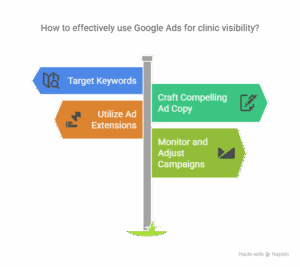
This is where most clinic owners get frustrated — they invest in SEO and then watch the first 3–4 months produce little visible change while the groundwork is laid. The answer isn’t to abandon SEO; it’s to run Google Ads in parallel while organic rankings build.
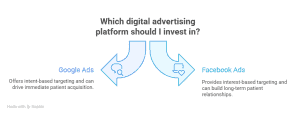
Google Ads provides immediate, measurable patient flow from day one. SEO provides compounding, lower-cost traffic that builds over 6–18 months. The two complement each other: ads keep the schedule full while SEO matures, and as organic rankings improve, you can gradually reduce your reliance on paid traffic. Most well-run clinic marketing programs use both.
Red Flags If SEO Isn’t Moving by Month 5–6
If you’re 5–6 months into an SEO engagement and seeing no measurable improvement in Google Business Profile impressions, organic traffic, or keyword rankings, something is wrong. The most common causes:
- Technical issues on the site that are preventing proper indexing
- Content that isn’t being created or is too thin to compete
- No backlink building happening — on-page SEO alone rarely moves competitive terms
- The agency is producing reports but not doing the actual work
A good SEO partner will show you ranking movement data, Google Search Console impressions, and GBP insights monthly — not just vanity metrics like “domain authority score.” If you can’t see what’s actually improving and why, that’s a problem worth addressing.
Why SEO Takes Time (And Why That’s Actually a Good Thing)
SEO rankings take time because Google is vetting your credibility. It wants to ensure that the clinics it shows to patients searching for healthcare services are actually reputable, established, and relevant. The same barrier to entry that frustrates new SEO campaigns is what makes organic rankings so valuable once you’ve earned them — a competitor can’t simply outspend you overnight the way they can in Google Ads.
The clinics that invest in SEO early and consistently are the ones that generate patient flow at the lowest long-term cost per acquisition. The ones that keep delaying it keep paying full price for every patient through ads.
If you want an honest assessment of your clinic’s current SEO position and what a realistic timeline looks like for your market, get in touch with SEO Medics. We work with healthcare clinics across BC and Canada and can tell you exactly where you stand.